If you are a small or medium business, and recently hired your first few salespeople, let me guess what is happening right now.
Every Monday, you are struggling to get an update of your sales pipeline. Customer knowledge is scattered, deal statuses are tracked differently, you have to mediate conflicts over lead ownership, and there is no fixed channel and format of communication within the team.
Internal sales communication discipline—the practice of consistently following a structured form of communication internally by the sales team—is an essential operational element that you would expect of SDRs. However, because sales is a profession built on individual ownership, most management, and also sales teams internally, are divided on the best way to communicate. And this problem only keeps on compounding with your growing sales operations.
Primarily there are three components of internal sales communication…
- Data communication -The raw details that the sales team logs like contact details, deal stage, no. of follow-ups.
- Information communication- The context for each customer like call notes, additional downloads.
- Knowledge communication- The strategic context on a given deal like: who the real decision maker is, what the client actually cares about, and where the risk lies.
Every sales conversation, meeting or report revolves around the above. The problem? A part of it is always spent reconstructing either of these layers instead of moving the conversation in a more strategic direction.
How do you ensure that every bit of internal sales communication is driven towards the ultimate objective of improving organizational sales visibility? For this, we operate through 4 fundamentals.
Four fundamentals of achieving internal sales communication discipline
Building discipline within internal sales communication requires: designing thoughtful processes, anticipating vulnerabilities, cultivating consistent habits, and establishing follow-up cadences.
Mastering thoughtful process building
One of the most difficult decisions for growing sales teams is determining what information needs to be logged in daily versus what can be communicated freely?
Building discipline in internal sales communication begins with clarity on how and where to communicate each type of information.
Selecting your communication platform
Whether you decide to work within Google Workspace, Microsoft for Startups, Slack, Zoho workspace or a combination of platforms, the key is deliberate selection and absolute consistency in how your team operates within them.
In case of data communication, consider:
- Where will all the data be logged?
- How can each sales stage be defined with clear entry and exit criteria?
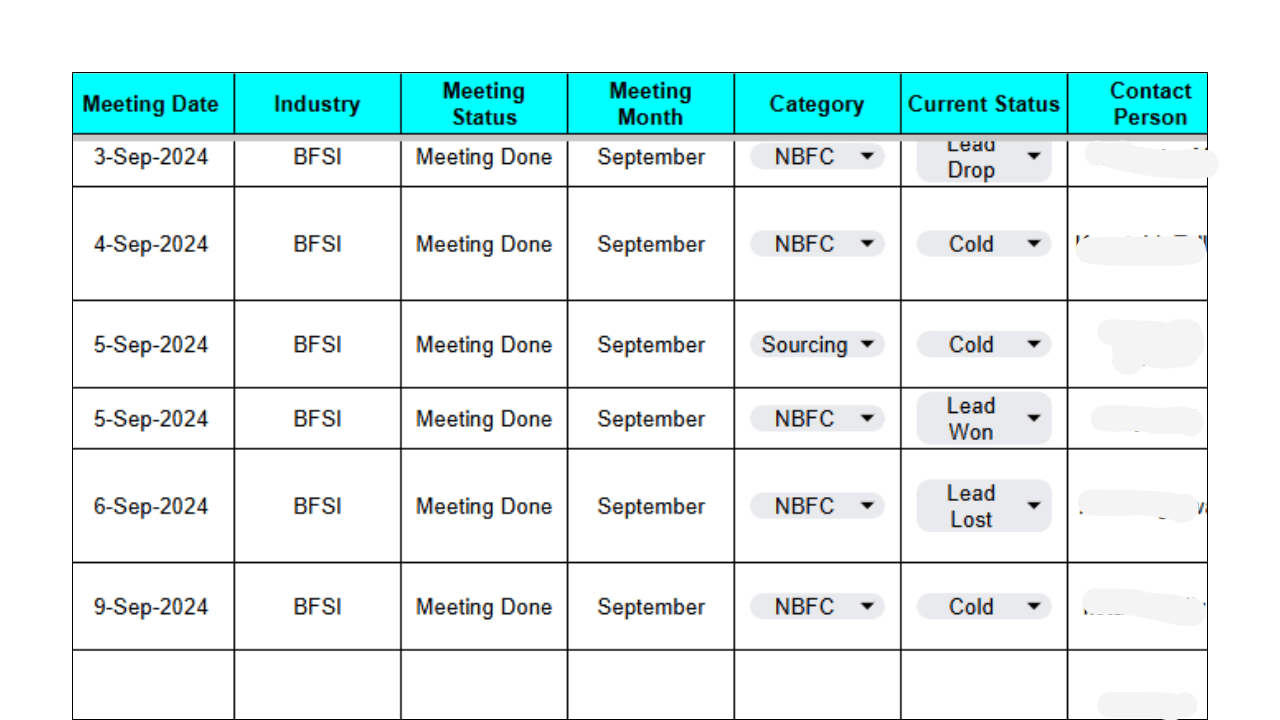
- What are the required data points for lead interaction? (for example: do you need details of who attended the meeting? When was the first meeting? Who was present from the client’s side?)
- Within what time period should reps update each data point?
For information and knowledge communication, consider:
- Do you want to maintain emails, and chats separately or within one platform?
- Can you create dedicated channels, folders, or threads for different types of communication?
- Will it be easy to navigate with a larger team size without requiring you to migrate your entire communication structure in six months?
- How does this platform handle search and retrieval?
Whichever platform you choose to select, should support the sales visibility needed for the organization.
Setting up communication formats
Once your platforms are selected, define how information will get communicated within those platforms.
Create standardized formats for certain communications like meeting invites and meeting notes. This helps to easily scan and understand the details of each meeting.
Standardization becomes especially critical when your clients operate on different platforms than you do. Your internal workspace might be Google-based, but Client A uses Microsoft Teams, Client B uses Zoom, and Client C still schedules everything via email and phone. The external variability is unavoidable. Standard formatting allows you to maintain control and visibility across all client interactions, no matter how scattered the external touchpoints are.
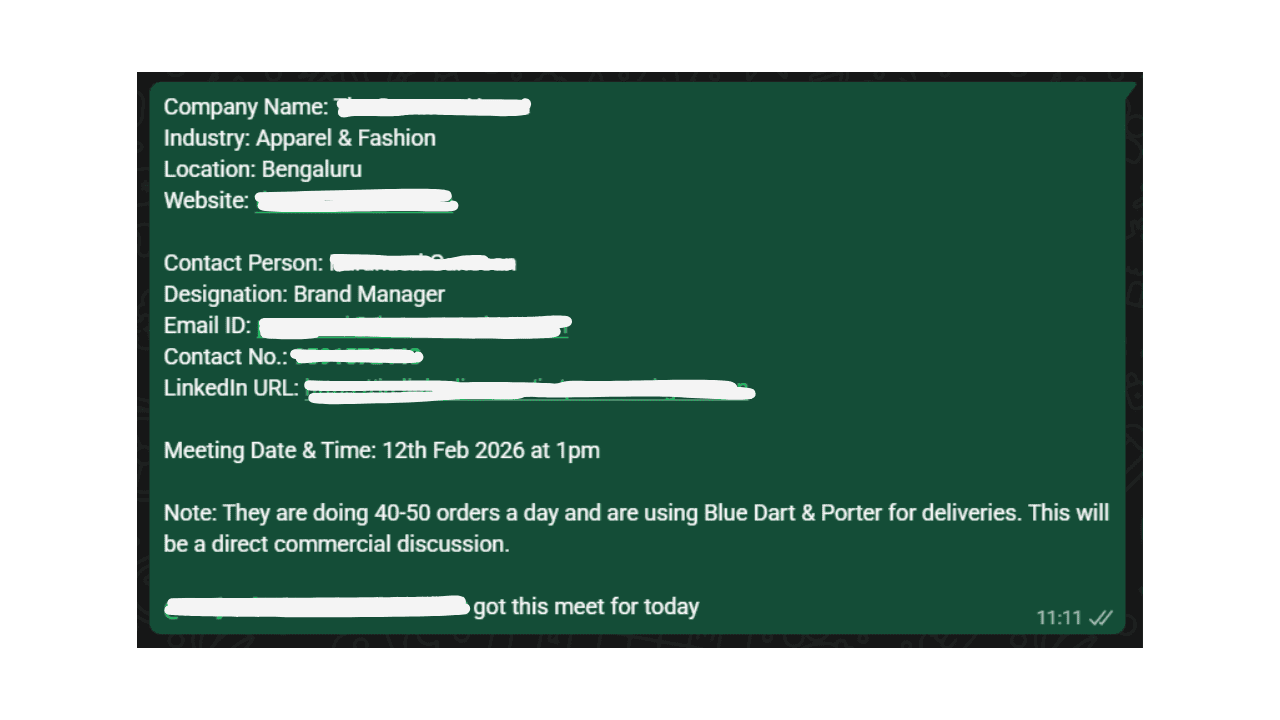
The objective is to design processes that show exactly what you need to see, in the format that you need to see it, while saving time.
Anticipating vulnerabilities
Your team will inevitably encounter technical limitations and practical challenges during day-to-day execution. These obstacles should not compromise the integrity of the process or lower what you expect from it.
Whether your communication discipline directly improves your ability to close deals, retain clients, and scale your sales operation, should be your true guiding north star.
Within that you may consider:
- Can every member of the team access and use a chosen platform confidently?At AIMS Consulting Services, we conduct structured Knowledge Transfers (KTs) where every team member is briefed on key aspects of the communication process. This understanding is then assessed through Reverse KTs, where team members explain back their understanding—exposing any gaps.
- Does the process enable clear division of scope within the team?If two reps are working the same account, who documents the meeting notes and who communicates the next steps internally? If your team is constantly asking "should I be the one to update this?" or "was I supposed to log that call?"—the process has a gap. Your communication systems should be able answer those questions before they're asked.
3. How can the process affect information sharing within the sales department in general? Not all sales information is meant for every member of the team. Define clearly: what is confidential for the management versus shareable with all the reps? Who has access to which channels of communication? State these boundaries as clearly as possible so there are no internal misalignments.
Nurturing habits within the team
Even the most thoughtfully designed process fails if your team doesn't internalize it as a habit.
This habit formation begins during onboarding. New sales hires should be trained on your communication protocols as thoroughly as they're trained on your product or sales methodology. This means:
Facilitating structured onboarding on communication protocols:Dedicate specific onboarding time to walking reps through the exact mechanics of your communication process. This should cover:
- How and when to update the pipeline tracker?
- How to document calls and client meetings with the expected level of detail?
- How to communicate internally about a client interaction—what to share, with whom, and through which channel?
- Which platforms are designated for sharing client information, and which are strictly off-limits for this purpose?
Within that you may consider:
- Can every member of the team access and use a chosen platform confidently?At AIMS Consulting Services, we conduct structured Knowledge Transfers (KTs) where every team member is briefed on key aspects of the communication process. This understanding is then assessed through Reverse KTs, where team members explain back their understanding—exposing any gaps.
- Does the process enable clear division of scope within the team?If two reps are working the same account, who documents the meeting notes and who communicates the next steps internally? If your team is constantly asking "should I be the one to update this?" or "was I supposed to log that call?"—the process has a gap. Your communication systems should be able answer those questions before they're asked.
Adding mandatory leadership touchpoints for confusion:Explicitly tell new hires that if they're ever uncertain about how to document something, how to flag an update, or which channel to use, they should approach management immediately.
Some of our internal enforcements include:
- Implementing a "one person editing at a time" rule in shared spreadsheets to prevent conflicting updates.
- Enforcing a strict rule that all client-facing materials must be shared only in designated channels where leadership has visibility, never via private DMs or personal email.
Deciding follow up cadences (especially important for remote sales teams)
Once your communication processes and systems are operational, the final element is determining how often and through which channels your team will formally sync.
This is particularly critical for remote sales teams. Every piece of information that would naturally surface in a shared physical space now has to be deliberately communicated. Without a reliable cadence, remote sales teams can disconnect easily.
Effective cadence design requires answering three questions:
- When will we sync?
- At what time will we communicate?
- On which platform will we communicate?
Cadence creates accountability within the organization and enforces the process follow-through.
How AIMS Consulting Services can help you with internal sales communication discipline?
It took us a lot of trial and error to build a strong internal sales communication discipline. When your sales team is aligned, informed, and following the same communication process, it can finally operate independently.
The best time to build this foundation is before the chaos forces you to. But if you're not sure where to begin—or if you've tried building this before and it fell apart—we can help.
From defining your pipeline stages to training your team on how to work within them, we help you build a sales department that runs like one.
Reach out to us to build the skills your team needs to communicate better and function smarter.
Work with us to build your sales process from the ground up—for your team, your product, and your market.